Kripal Singh Shekhawat, born on December 11, 1922, in Mau village of Rajasthan’s Shekhawati district, grew up in a zamindar Rajput family. From childhood, he absorbed local crafts like meenakari, lac work, beaten metal, and frescoes, sparking his lifelong passion for traditional arts. As a young man, he gained his first formal training in naturalistic painting through evening classes led by Bhoor Singh Shekhawat, a graduate of Bombay’s Sir J. J. School of Art and protégé of the Birla family.
The Humble Beginning
In 1943, he joined Kala Bhavan in Shantiniketan to learn painting under the guidance of Nandalal Bose. He later taught there till 1951. In 1951, with the help of industrialist Ghanshyam Das Birla, he went to Japan to study traditional oriental painting at the Tokyo National University of Fine Arts, Tokyo. In Tokyo he learned under revivalist nihonga artists like Kawabata Ryūshi and Mayeda Renzō. He also studied the classical works of artists like Toba Sōjō Kakuyū (1053–1140) and Ogata Kōrin (1658–1716).
A skilled miniaturist and fresco painter, he blended traditional Indian techniques with modern sensibilities. This foundation equipped him to tackle the challenges of fading artisanal traditions. Upon returning to Jaipur, he started teaching miniature painting at the Shilp Kala Mandir. He immersed himself in the local pottery scene, recognizing the urgent need to sustain Blue Pottery amid modernization and economic pressures.
The Efforts
Jaipur Blue Pottery traces its roots to Persian and Central Asian influences, introduced to India in the 14th century. Craftsmen shape it from quartz, glass, and other minerals, firing pieces at low temperatures to achieve the signature turquoise hue from cobalt oxide.
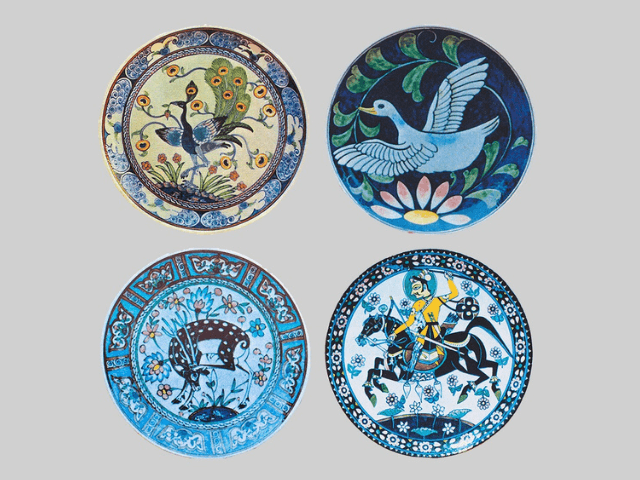
In the mid-20th century, the art of blue pottery was struggling to survive with a dwindling number of practitioners. By the 1950s, the art form was on the verge of extinction because of competition from mass-produced ceramics. Shekhawat stepped in to address these issues. He began by studying ancient techniques, experimenting with glazes and firing methods to improve durability and appeal. He refined the craft, introduced new designs inspired by miniature painting and Japanese aesthetics, and elevated it from a dying village craft to a respected fine art form.
Kripal Kumbh
In 1962, Shekhawat founded Kripal Kumbh, his studio in Jaipur, which became a hub for innovation and training. He trained apprentices in traditional methods while introducing modern designs that blended heritage motifs with contemporary aesthetics. This approach expanded the market for Blue Pottery, attracting buyers from India and abroad.
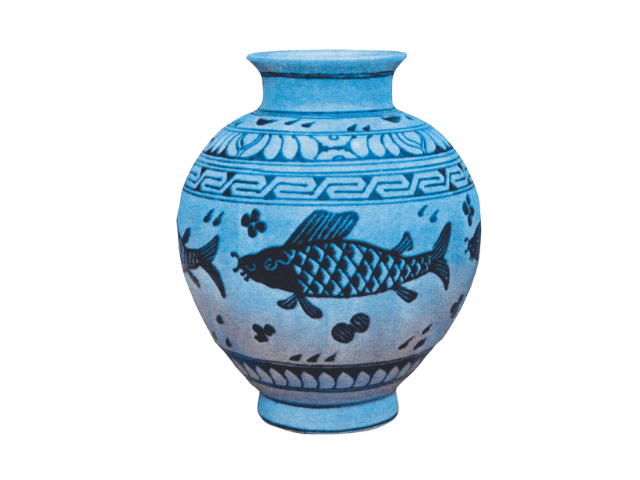
Shekhawat’s pieces often featured intricate patterns inspired by Mughal architecture, flora, and fauna, yet he adapted them for functional items like vases, tiles, and tableware. His efforts not only preserved the craft but also elevated it to a recognized art form.

The Legacy of Kripal Singh Shekhawat
Shekhawat collaborated with government bodies and cultural organizations to promote Blue Pottery. He participated in exhibitions across India and internationally, showcasing the craft’s potential. In 1974, the Indian government awarded him the Padma Shri for his contributions to arts and crafts. He continued to innovate, developing lead-free glazes that met global safety standards, which helped sustain the industry amid environmental concerns. By mentoring over 100 artisans, Shekhawat ensured the knowledge was passed to new generations, preventing the craft’s extinction.
His revival work extended beyond production. Shekhawat documented techniques in writings and workshops, creating resources for future artisans. He advocated for fair trade practices, helping potters gain economic stability. Today, Jaipur Blue Pottery thrives as a GI-tagged product, with exports supporting local economies. Shekhawat’s legacy endures through Kripal Kumbh, now run by his family, and in museums displaying his works.
Father of Modern Jaipur Blue Pottery
He served as director of the Sawai Ram Singh Shilpa Kala Mandir in Jaipur, where he trained generations of artisans. For his outstanding contribution to Indian crafts, he was awarded the title Shilp Guru in 2002.
Today, Shekhawat is widely regarded as the Father of Modern Jaipur Blue Pottery. He passed away in 2008, but his impact remains evident in the vibrant community of Blue Pottery artisans in Jaipur. His story highlights how individual dedication can safeguard cultural heritage against modern challenges.
Kripal Singh Shekhawat on Wikipedia